


Last Updated: July 13, 2026
What’s new: Consolidated all marine threats into one section, added lionfish and scorpionfish detail, restructured article to front-load the safety content.
📝| Originally Published: November 2025
What’s new: Consolidated all marine threats into one section, added lionfish and scorpionfish detail, restructured article to front-load the safety content.
📝| Originally Published: November 2025
A snorkeler on my jet ski tour spots a great barracuda hovering just under the surface and instantly freezes. I can see the panic through their mask as they float motionless, convinced a strike is coming. Meanwhile, my attention is locked on the rocky limestone ledge where they are planning to stand. Right in those dark, watery crevices, dozens of long-spined sea urchins are tucked away. The guest is entirely focused on a curious, passive fish while preparing to step directly onto a cluster of venomous black needles.
This is the classic pattern I see out on the water. Visitors lose sleep worrying about massive sharks and aggressive barracudas, yet they routinely walk bare-legged into patches of fire coral or step onto hidden urchins without a second thought. During my 7 years guiding on these reefs and leading more than 930 jet ski and snorkel tours, the animals that actually send people to the local clinic are never the ones they were screaming about before jumping into the ocean.
Understanding what is actually native to our island and how these animals behave will completely change how you approach your cozumel shore snorkeling experience. By learning how to recognize a few key marine species and understanding the behavior of our unique land animals, you can easily keep your vacation entirely injury-free.
July 2026 Update
What I am Seeing on the Reef This Season
Lionfish sightings are up on the shallow reefs this summer, particularly near the El Cielo corridor. Fire coral remains the single most common cause of skin irritation on guided snorkel trips. On land, the Cozumel pygmy raccoon has been re-confirmed as critically endangered by wildlife researchers this year, making an actual sighting is genuinely rare.
Are there Snakes in Cozumel?
Yes, Cozumel is home to several snake species, but none of them pose a realistic threat to tourists. The most famous resident is the boa constrictor, which was introduced to the island decades ago. These massive snakes live deep within the dense jungle canopy of the interior, far away from resort pools, sandy beaches, and shopping districts where travelers spend their time. They are completely non-venomous and spend their lives hunting small rodents and birds high in the trees.
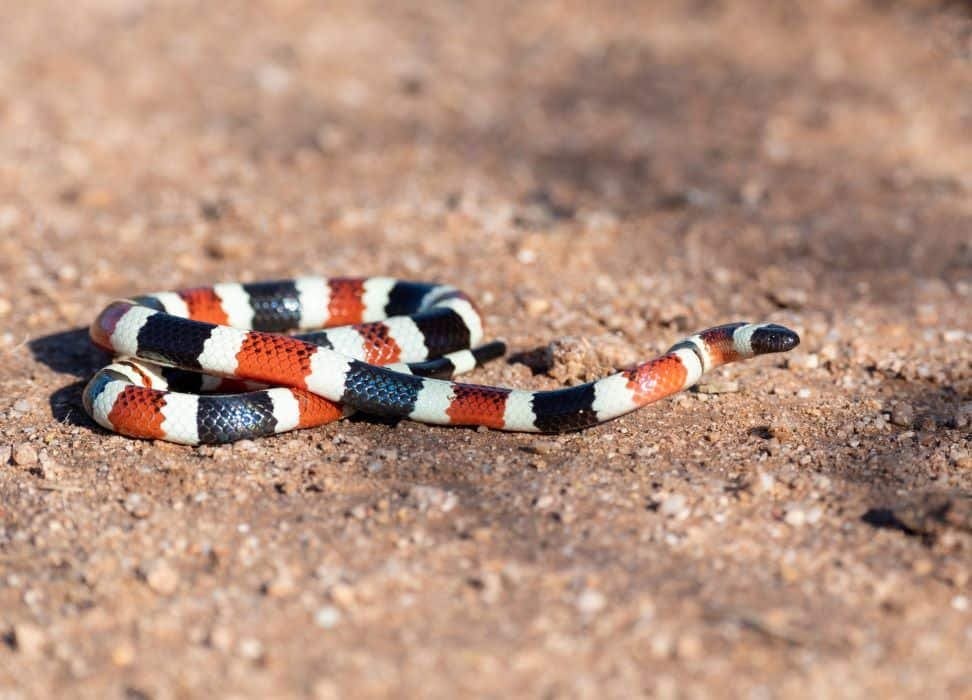
A few smaller native snake species also inhabit the brush, but they are incredibly shy and completely harmless. In all my years running tours and exploring the island, I have never seen or heard of a single tourist being bitten by a snake in the resort and beach zones. The land is the easy part. The marine environment is where you actually need to pay attention.
Dangerous Marine Life in Cozumel
Now this is where it’s gets important. The core rule of our reefs is simple: scary-looking creatures are almost always passive, while the harmless-looking ones are the ones that will actually get you. The marine life that causes real discomfort does not hunt swimmers. Instead, these creatures are small, perfectly camouflaged, or completely stationary animals that rely on passive defense to survive.
💡
Pro Tip
Over 90% of emergency visits come from passive stationary organisms in crevices not sharks.
Fire Coral
Fire coral is the absolute number one cause of skin injuries on our guided snorkel trips. It is not actually a true coral, but a colony of tiny organisms that grow over dead reef structures and rock formations. It looks like a mustard-yellow or light-brown branching structure capping the tops of shallow reefs, often with tiny hair-like stingers visible along its edges. Tourists typically brush their knees, thighs, or forearms against it when they drift too close to the reef top or when they scramble to exit the water onto rocky shorelines.
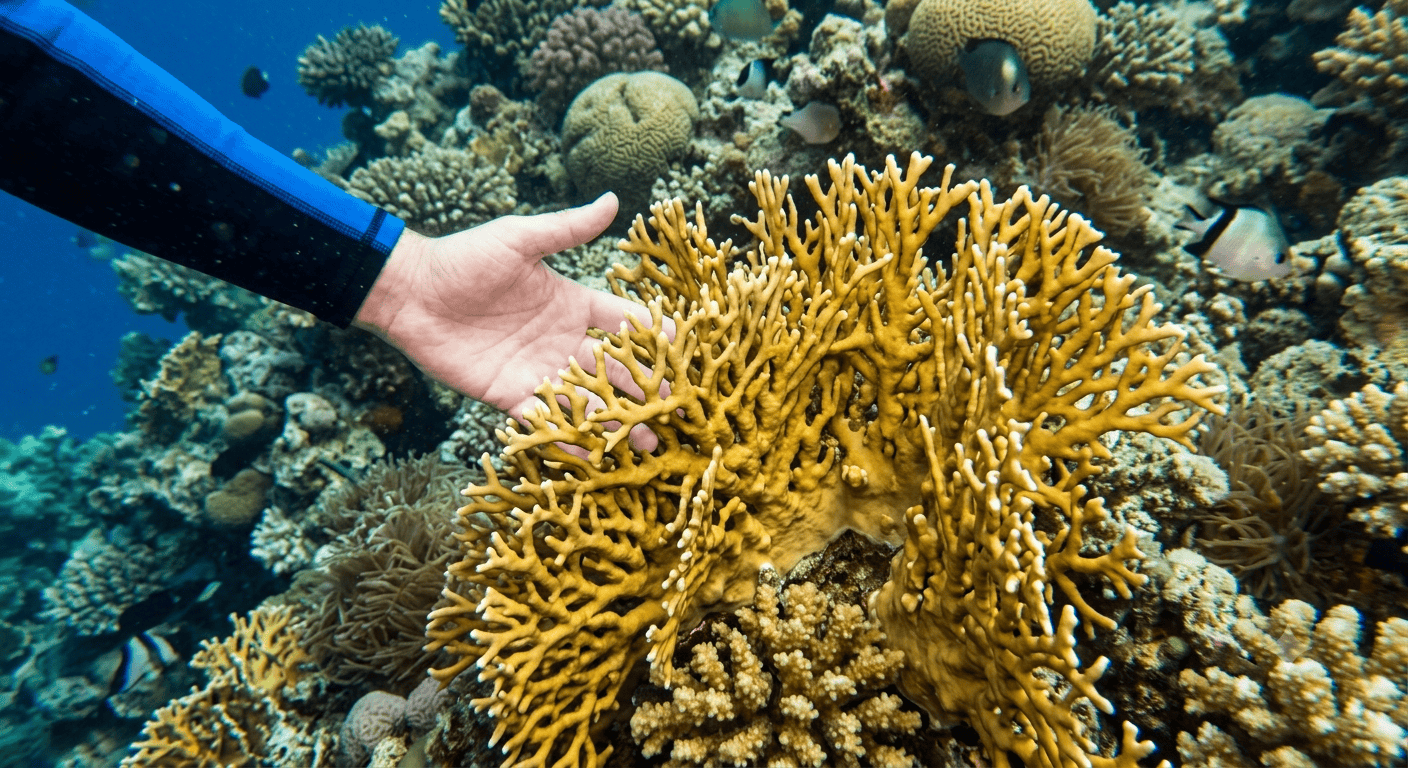
The colors of these may vary but lol for the pattern
The sting produces an intense burning sensation that starts within 60 seconds of contact, quickly developing into raised red welts that itch and throb for days. I have been lucky enough to never experience it. I recommend always keep a respectful distance from any yellow-brown reef structures.
Protecting yourself from fire coral comes down to one thing: body position. Stay flat on the surface and you will glide right over these formations without contact.
Sea Urchins
Long-spined black sea urchins are incredibly common in the shallow waters surrounding the island. They tuck themselves into limestone crevices, under rocks, and around concrete pier structures. You will never get stung by a sea urchin while actively swimming or snorkeling. Instead, injuries happen during entry and exit when people attempt to stand on submerged rocks or lose balance wading through shallow, wavy water.
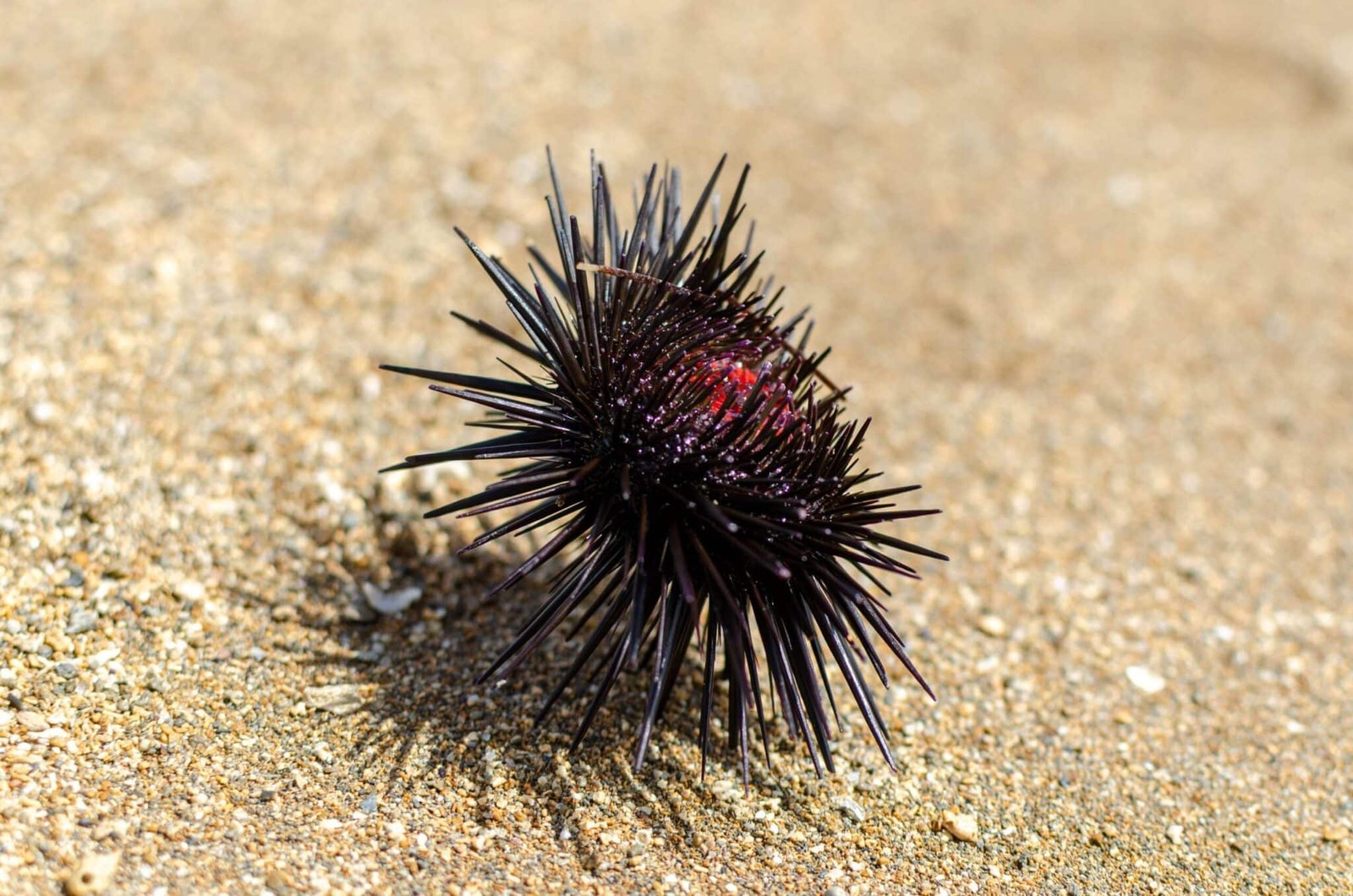
Sea Urchin Off the Coast of Cozumel
Their long brittle spines easily pierce thin water shoes and break off deep under the skin, causing immediate throbbing pain. Attempting to pull them out usually crushes them into fragments your body has to dissolve over weeks. This often happens mostly when tourist choose a cozumel beach near cruise port, because they are rocky where they love to live.
Sandy entries eliminate the need to step on rocky urchin habitat. You can avoid this entirely by planning beach days at the one of the beach clubs in Cozumel where it’s 100% sand.
🏖️
Beach clubs in Cozumel are rarely free. Some days passes suck.
Which ones are worth your port day?→
Lionfish
The lionfish is a strikingly beautiful but highly venomous invasive species from the Indo-Pacific. With no natural predators in the Caribbean, they have multiplied rapidly across local reefs. They hover completely motionless under deep reef ledges and inside dark overhangs. Because they do not flee when approached, tourists occasionally contact their fan of venomous spines when reaching into crevices or bracing against the reef.
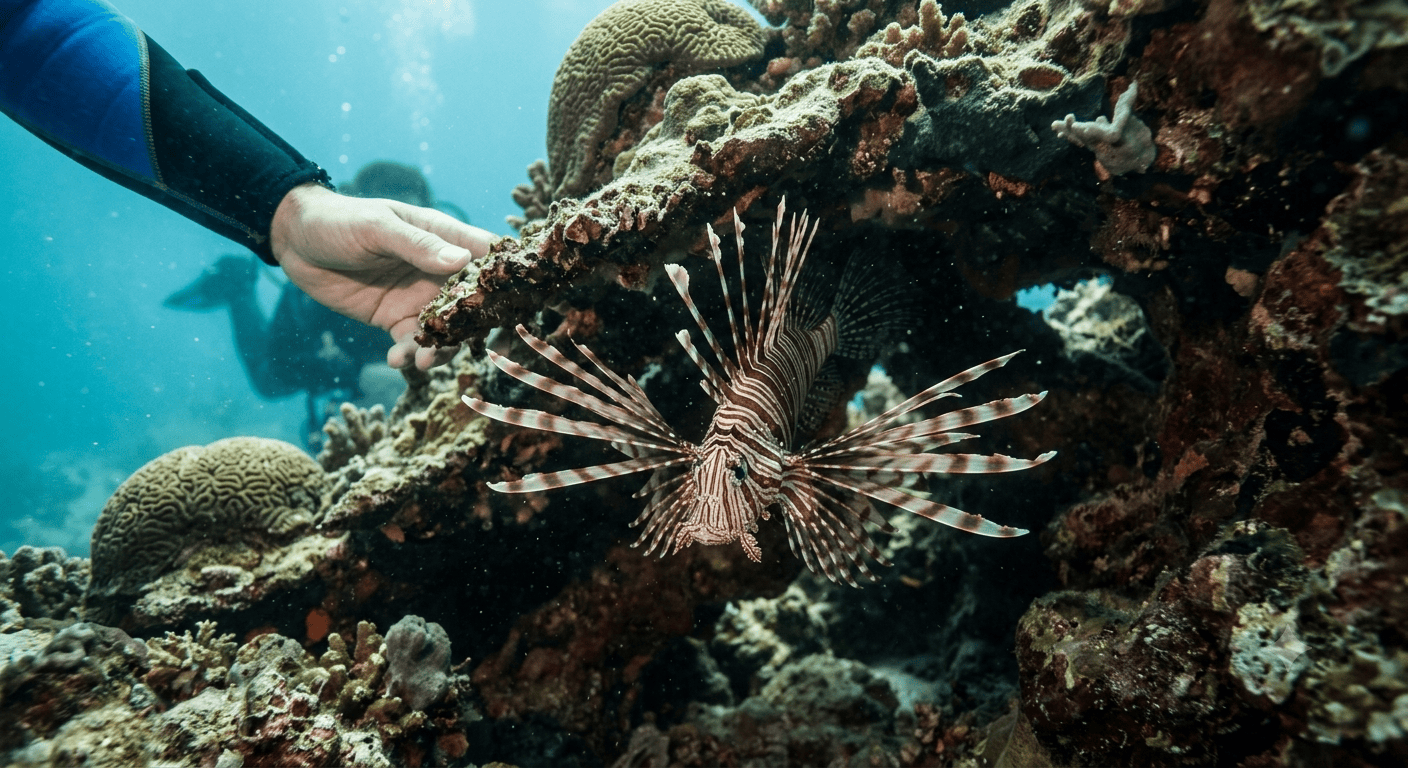
A lionfish a Columbia reef off cozumel’s coast
A poke from a lionfish spine delivers a neuromuscular toxin causing excruciating pain, severe swelling, and occasionally nausea. Local dive masters and conservationists actively hunt them, and many island restaurants serve the fish. You will see them on the menu and advertised as “delicate white meat” but I just haven’t worked up the never to order it.
I used to be afraid of fish like these before I started visiting Cozumel frequently and than started working here as the American Reservations Director. As you learn more about the way things go down here you realize you have much less to worry about. For example most people are worried about what happens if the weather turns bad and their excursions gets cancelled.
Will you get your money back? Most places the answer is no (unless you cancel 24-hours in advance) but at jet ski Cozumel we are different. Don’t take my word for it just read this customers Google review.
What happened when a guest got rained out
"An hour before our time the dark clouds and rain rolled in."
Booked a parasailing excursion and an hour before our time the dark clouds and rain rolled in. I cancelled via email. The next day got an email back saying our deposit was fully refunded. Easy peasy.
M
Michelle · Google review ★★★★★
Scorpionfish
Scorpionfish are the undisputed masters of reef camouflage. They sit perfectly still on the bottom, looking exactly like a chunk of algae-covered limestone. Their bodies are covered in textured skin flaps that mimic surrounding rock, making them nearly invisible even to experienced guides. They possess venomous dorsal spines they raise immediately if threatened.

Scorpion Fish in the waters off Cozumel.
The only danger to humans comes from stepping or placing a hand directly onto one. Snorkelers who stay horizontal face near-zero risk. Never touch, grab, or stand on any part of the reef floor and these animals will never bother you.
Nurse Sharks
We spot nurse sharks on roughly half of our deeper reef snorkel tours. They can grow up to nine feet long, which startles swimmers who are not expecting to see a shark. But they are passive suction feeders that spend their days resting on the sandy seafloor under coral overhangs, hunting crabs, lobsters, and small sea urchins. They have zero interest in humans and will swim away into the blue if you approach too closely.
An injury only occurs if a swimmer corners, pets, or grabs one by the tail. During tours, I am far more concerned about where guests put their hands on the reef than I am about the sharks resting below us.
Barracuda
Great barracudas are permanent residents on our shallow reefs. They hover motionless in mid-water and stare at snorkelers with large eyes and a prominent, tooth-filled underbite. While their appearance is intimidating, they are curious but completely non-aggressive toward humans. They hunt small, shiny, fast-moving fish with lightning bursts of speed.
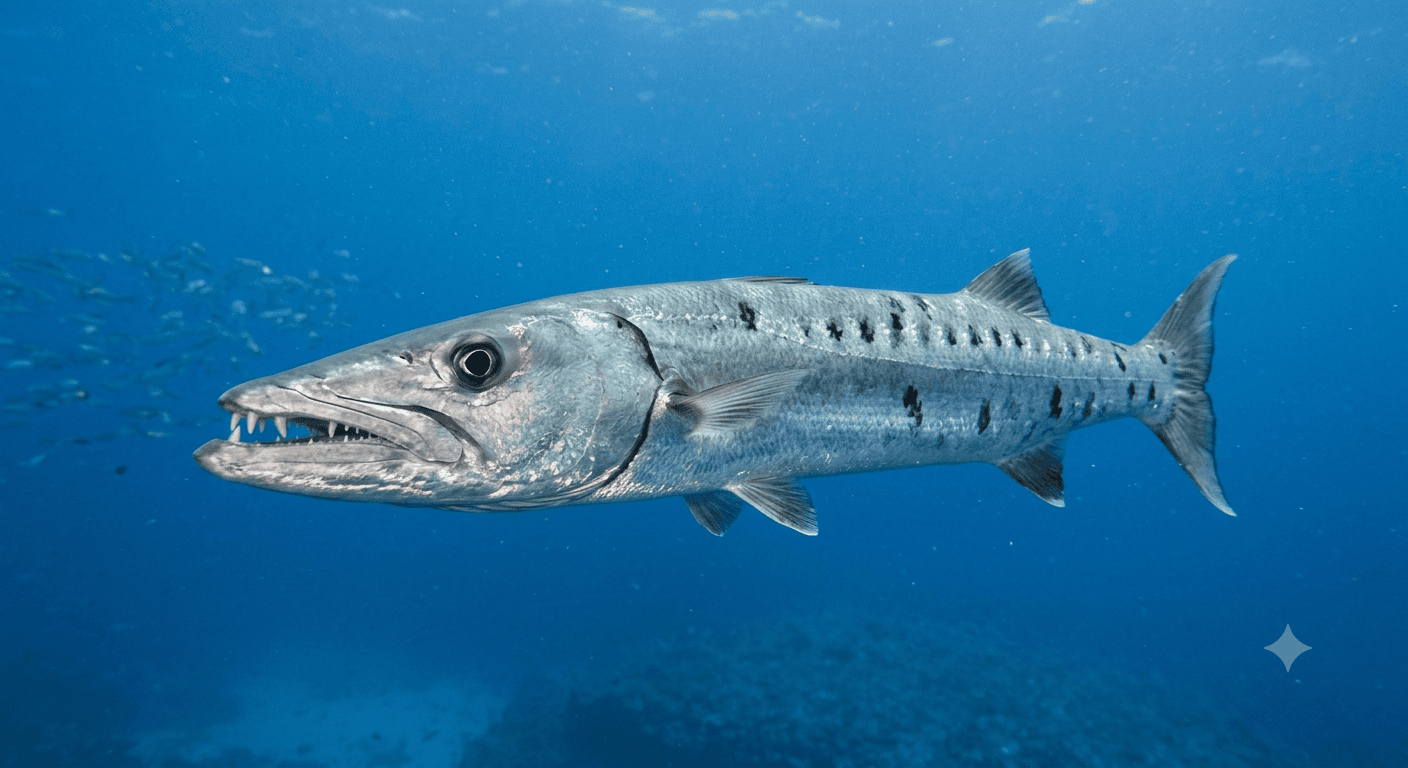
They look mean but they are deep water fish
The only real risk is mistaken identity. Shiny silver jewelry, metallic watches, or reflective sequins in the water can look like a panicked sardine to a barracuda. This is why I enforce a strict jewelry-removal rule at the marina before every departure. Leave the metal in your hotel room and the barracudas will simply watch you swim by.
Moray Eels
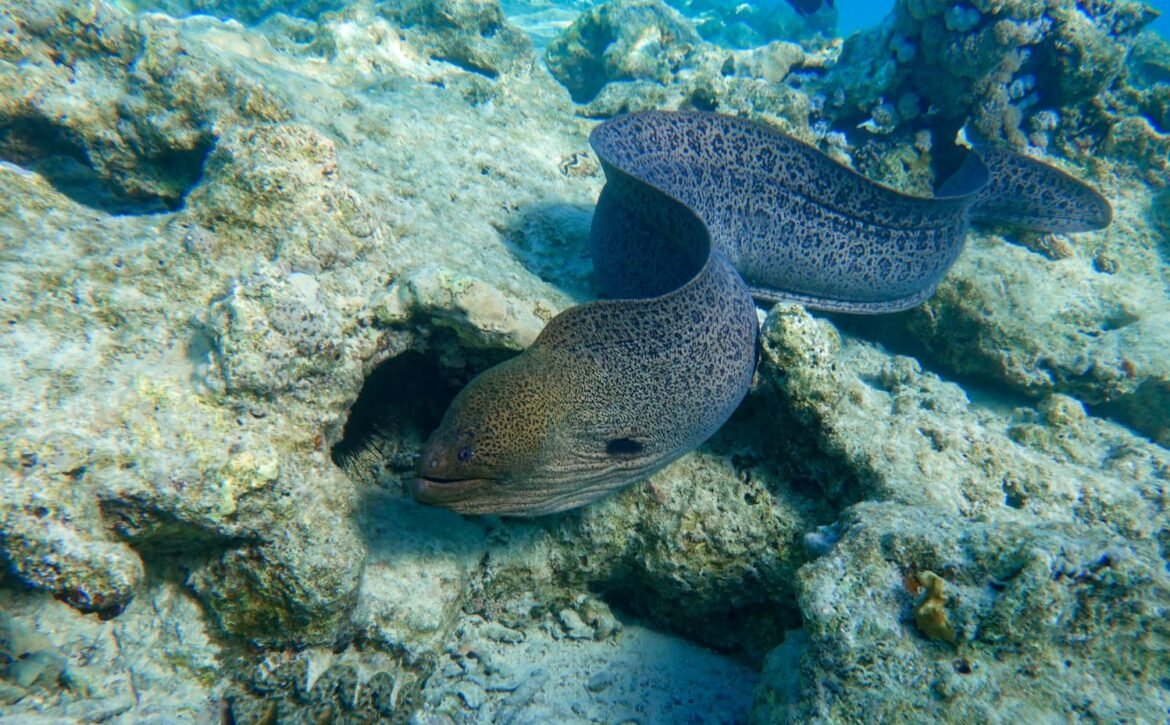
Moray eels live inside the deep crevices of the reef, often poking just their heads into open water. You will see them constantly opening and closing their mouths. This is not aggression — it is their natural way of pumping water through their gills to breathe. They are highly territorial and possess razor-sharp backward-curving teeth designed to grip slippery prey.
An eel bite is painful, prone to infection, and difficult to release because of their strong jaw reflex. Avoiding them is simple: never reach your hands into dark holes in the reef. Keep your fingers to yourself and they will stay safely in their rocky homes.
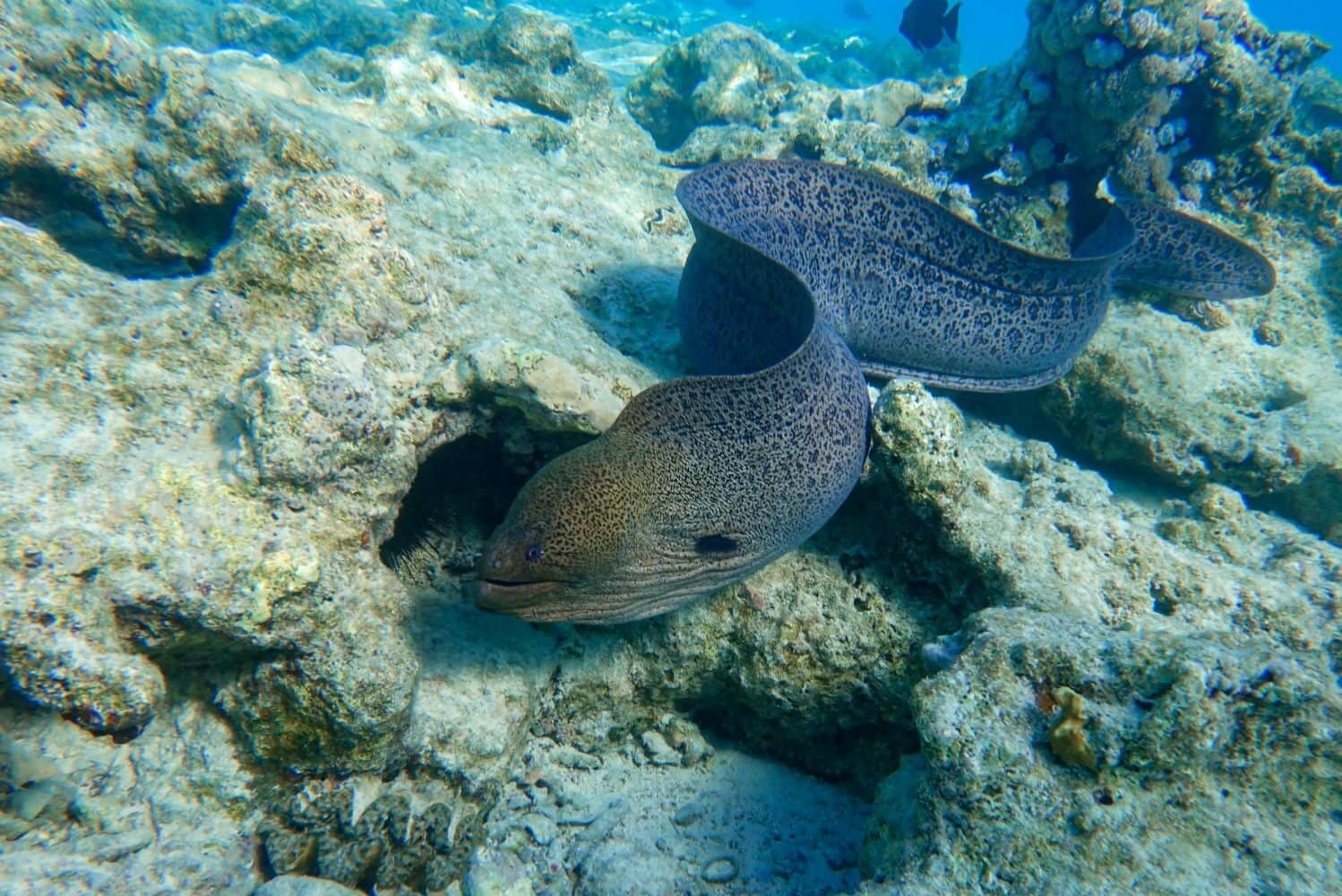
Moray Eel off the coast of Cozumel
Jellyfish
Most jellyfish around the island are harmless comb jellies that drift peacefully in the current and carry no stinging cells. During spring months, we occasionally see small blooms of thimble jellyfish that can cause a mild itchy rash if trapped under a rash guard. Severe dangerous stings are rare in these waters, and any mild irritation resolves quickly with vinegar.
Jellyfish are real things to worry about in Cozumel. Like covered in my El Cielo snorkeling blog I came within feet of jelly fish. It’s like they appeared outta nowhere, 20-30 of them. My buddy got stung but I was luckily on the edge of their group and was able to get out. This happened site snorkeling and isn’t something you have worry about on our Cozumel snorkeling tour. Boats take 12 person snorkel groups out to the reef where the jellyfish don’t hangout
Animals Native to Cozumel
Our isolated island ecosystem has produced some genuinely unusual results. Many of our land animals are island-shrunk versions of familiar mainland species, evolving over thousands of years to fit a smaller geographic range. You will not find these creatures anywhere else on earth.

Our most famous endemic resident is the Cozumel pygmy raccoon. This critically endangered animal looks like a miniature North American raccoon — the kind raiding trash cans in your neighborhood back home — except roughly half the size, with a distinctive golden-yellow tail and a much smaller snout. Only a few hundred individuals remain in the wild. Spotting one in the coastal mangroves is genuinely rare and worth stopping for.
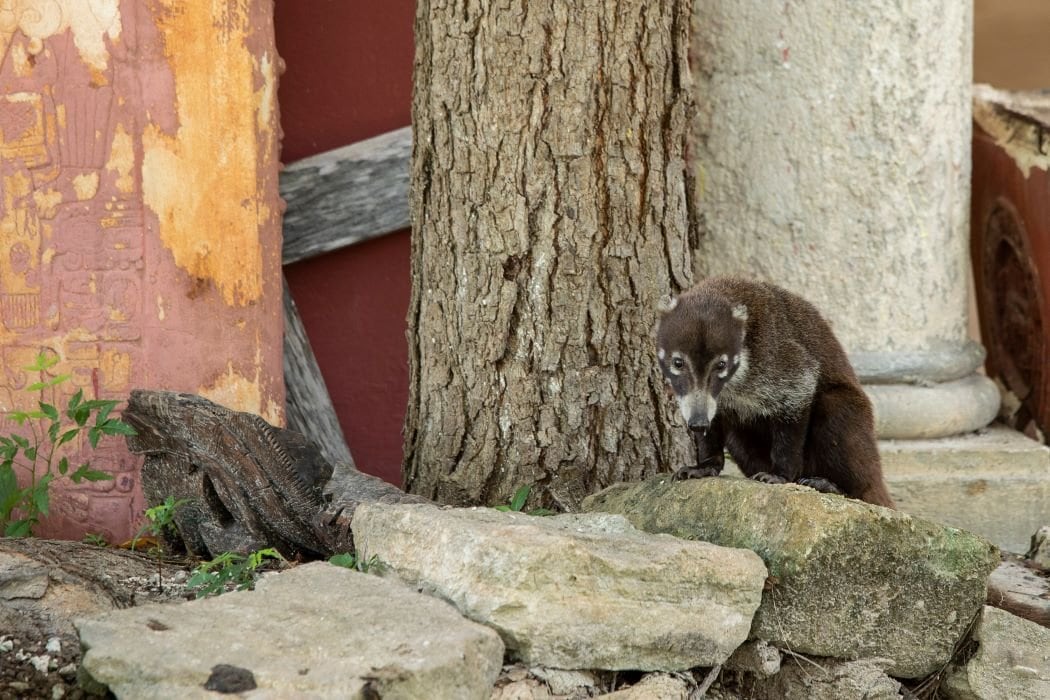
You may also see the Cozumel coati, a raccoon relative with a long flexible snout, traveling in busy family groups through the brush looking for insects and grubs. Green and spiny-tailed iguanas sun themselves on hotel walls and limestone ledges all over the island. They are vegetarian and harmless, though males will perform rapid head-bobbing to defend their sunny perches from anyone who gets too close. But you will see these things running around at beach clubs.
🌴
You've got six hours. Don't waste them deciding.
which port day excursion to book →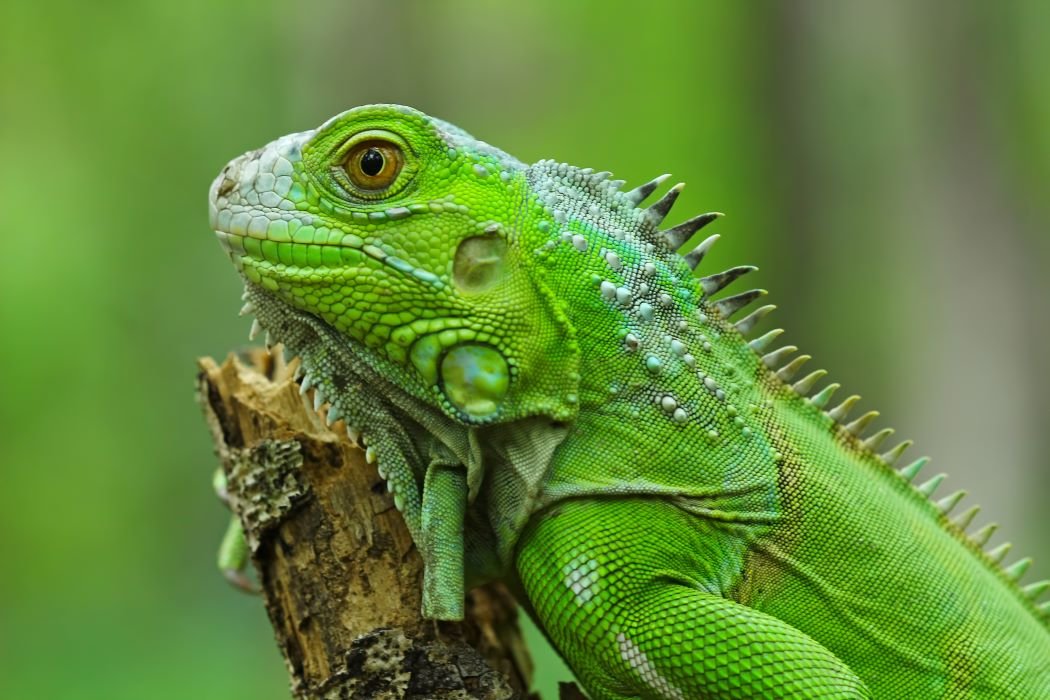
💡
Pro Tip
If an iguana starts rapidly bobbing its head at you, take two steps back. That’s a territorial warning, not curiosity.
Safety Precautions
Protecting yourself from local wildlife does not require a liability waiver. It comes down to five simple rules we use on every professional tour departure. Follow these and your reef excursions stay injury-free:
- Stay horizontal in the water. Never drop your feet to stand unless you are in a completely sandy area. Fins up prevents stepping on hidden urchins or camouflaged scorpionfish.
- Remove all jewelry before swimming. Leave necklaces, rings, and metallic watches in the hotel room. No shiny surfaces means no barracuda confusion.
- Practice the hand-tuck posture. Hands flat against your chest or clasped behind your back when near the reef. This keeps fingers away from moray eel territory and skin away from fire coral.
- Identify your entry and exit before you go in. Rocky east-side shorelines are high-urchin zones. Sandy west-side beach entries are dramatically lower risk.
- Use ocean water or vinegar for stings — never fresh water. Fresh water changes the chemical balance and triggers remaining stinging cells to release more venom.
As you plan the best things to do in Cozumel around your reef excursions, these protocols keep the trip on track. For a broader look at travel security, local transportation, and neighborhood safety, our guide on is Cozumel safe for tourists covers the full picture.
Frequently Asked Questions
Are there dangerous animals in Cozumel?
Yes, but not the ones tourists expect. Fire coral, sea urchins, lionfish, and scorpionfish cause the actual injuries on the island. Sharks, barracudas, and moray eels are present but passive.
Are there poisonous snakes in Cozumel?
No venomous snakes pose a realistic threat to tourists in Cozumel. The island has boa constrictors (non-venomous, deep jungle only) and a small number of native harmless species. No tourist has been bitten in the resort and beach zones.
Are there crocodiles in Cozumel?
Yes, American crocodiles live in Cozumel’s inland lagoons and mangrove channels, particularly in the Punta Sur reserve. They do not inhabit tourist beaches or the western coast swimming areas.
Are there sharks in Cozumel?
Yes, primarily nurse sharks resting on the sandy bottom near reef ledges. They are passive bottom feeders and swim away from people. Larger open-water species stay well offshore and are not encountered by swimmers or snorkelers.

Poe Sinclair
Reservations Director · Cozumel since 2019
American originally from Wisconsin, now spending most of the year in Cozumel partnering with Jet Ski Cozumel. Every guide on this site comes from what I see on the island day-to-day — not from other travel blogs.
Read full bio →
Posts You Might Like

Crime in Cozumel: What the Stats Don’t Show
Crimes in Cozumel are uncommon. Learn more about the strong safety record.
Are there dangerous animals in Cozumel?
Explore Cozumel safely: Learn about the island’s wildlife, including the unique Cozumel...
Is Cozumel Safe For Tourists
What’s new: Updated safety rating, crime stats. Added FAQ’S, female traveler...

Is Cozumel safe from drug cartels
Discover the truth about Cozumel’s safety from drug cartels. Unveiling strong security...